Real questions from tired parents, answered plainly.
›What words should my 2 year old know?
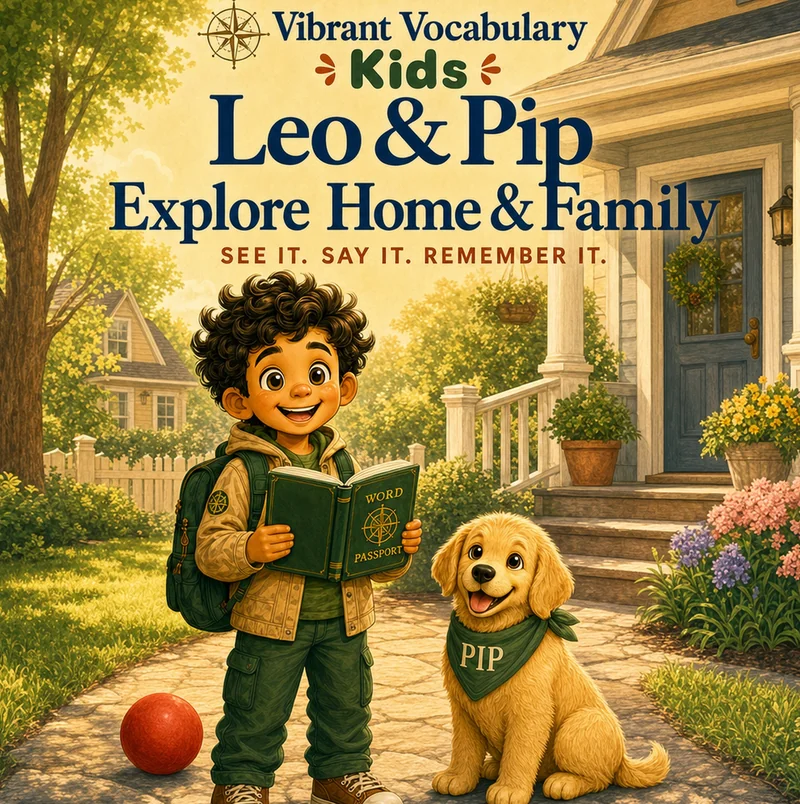
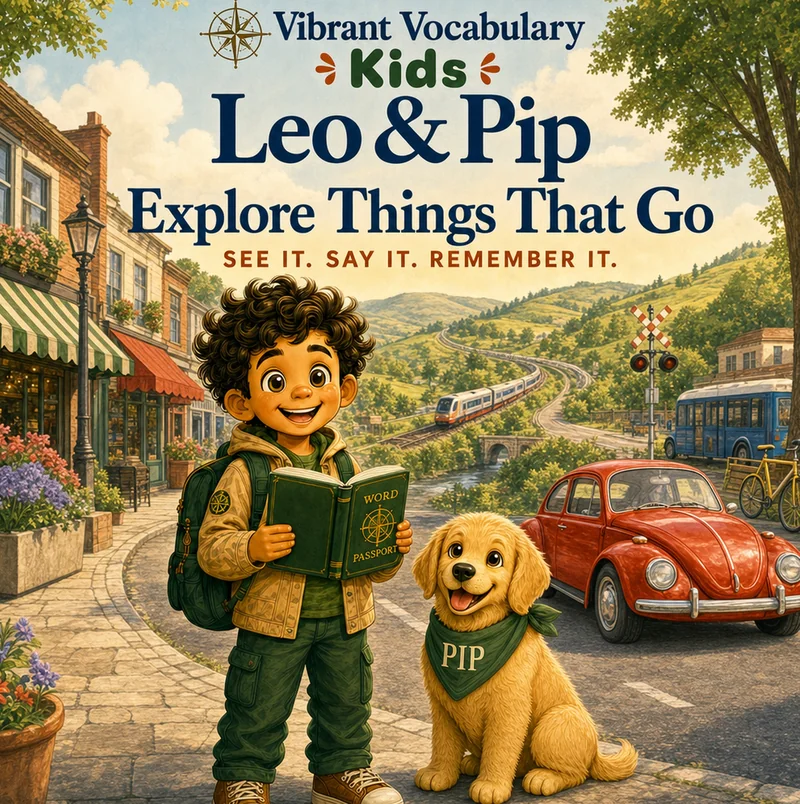
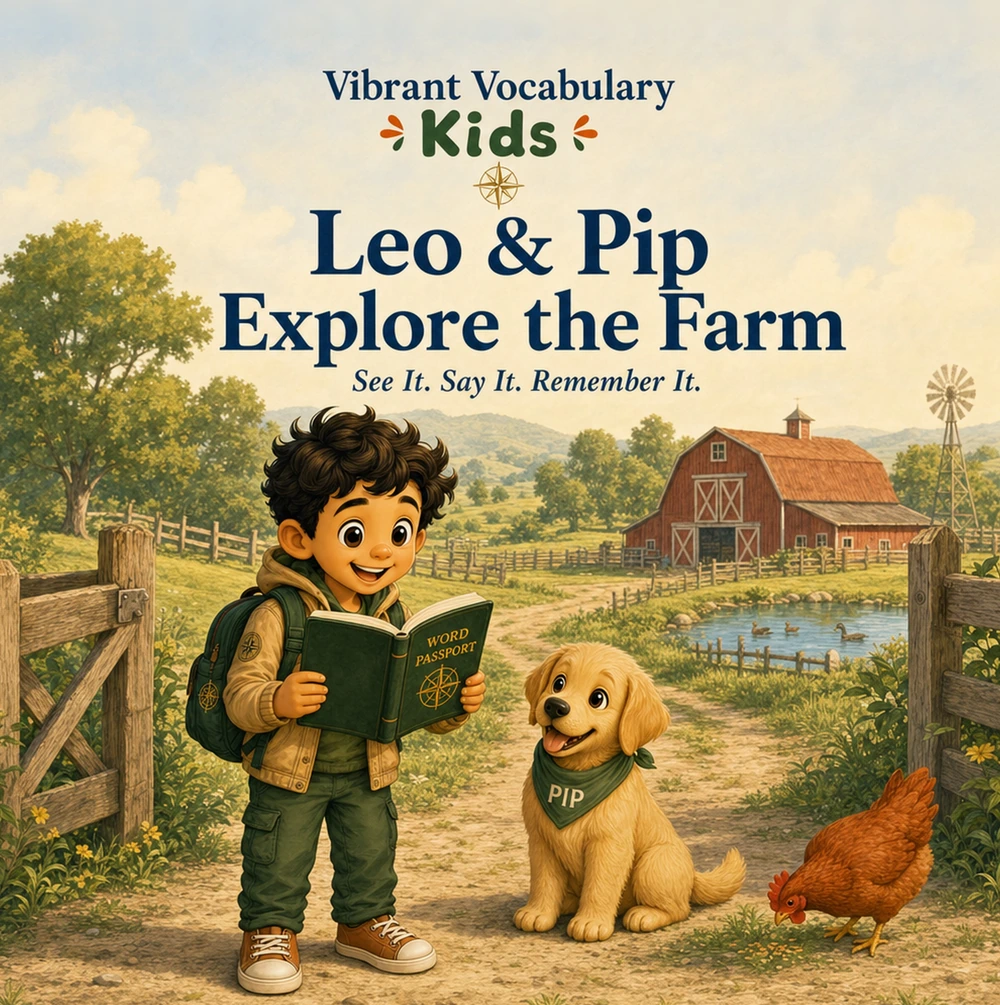
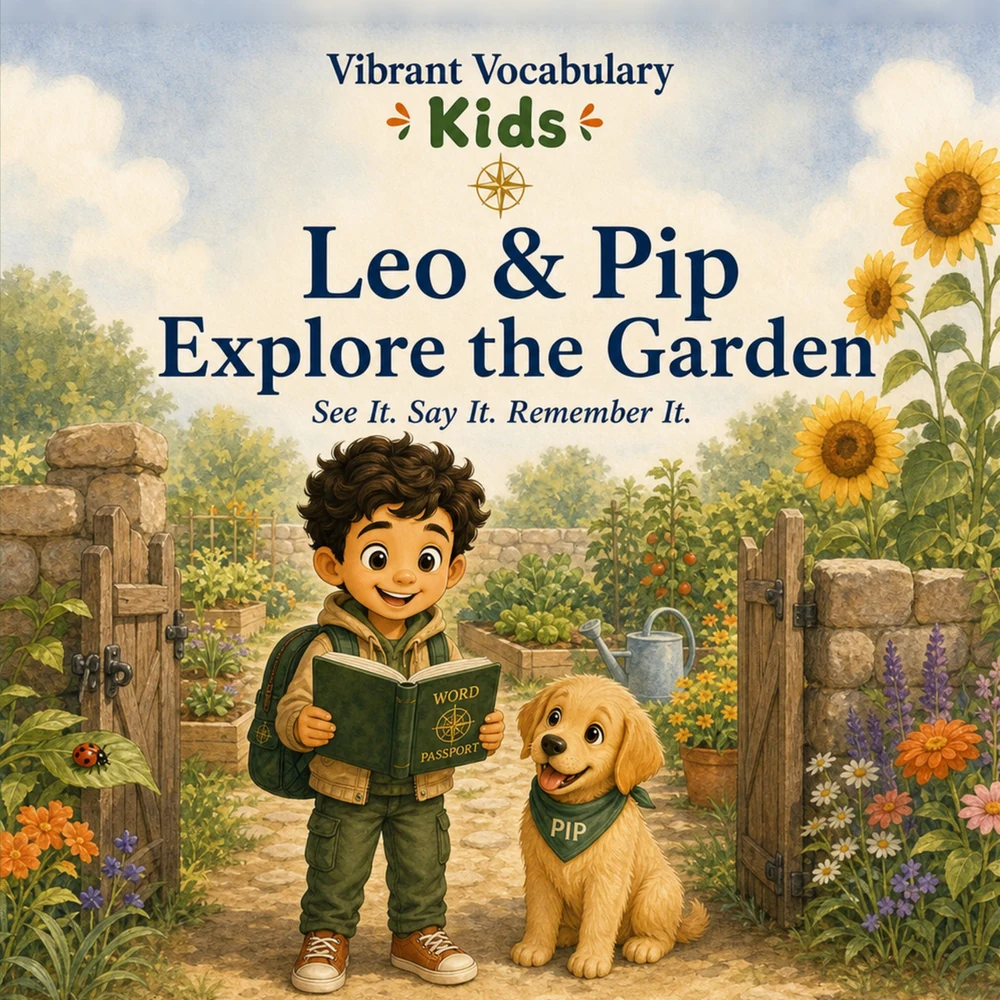
There's no single list, and children vary enormously. What helps is naming things out loud all day — the cup, the shoe, the dog. The Word Explorer series walks through about 100 first words across the books: animals, food, body and clothes, home and family, things that go, farm animals, and garden bugs. Each book teaches seven new words plus a handful of new ideas, and never repeats them.
›How do I teach my toddler to talk?
Point at it. Name it. Then pause and wait — the pause is the part most of us skip. Say it together when they try. Every one of our books has a parent pronunciation guide showing how each word sounds broken into chunks, so you can model it without guessing.
›When should my child be saying these words?
Most two-year-olds are adding words quickly, and between three and five they start layering on ideas like big and little, over and under, more and less. Children arrive at these at their own pace. Our books are built to meet a child wherever they are rather than test them.
›Can my toddler actually use a book like this?
Yes. One idea per page, thick uncluttered artwork, and nothing busy competing for attention. A two-year-old can point at a page long before they can answer a question about it, and pointing is where it starts.
›My toddler isn't talking much yet.
Start with looking and pointing rather than asking them to repeat. Approximations count — 'ba' for ball is a word. Repetition is not boring to a toddler, it's how the word sticks. If you have concerns about your child's speech, talk to your paediatrician or a speech-language pathologist; these are books, not an assessment.
›Are these books good for 2 year olds?
They're made for ages 2 to 5. A two-year-old will point and name; a four-year-old will hunt for the hidden find-it object and work the puzzles. The same book grows with them.
›Screen-free? What's the format?
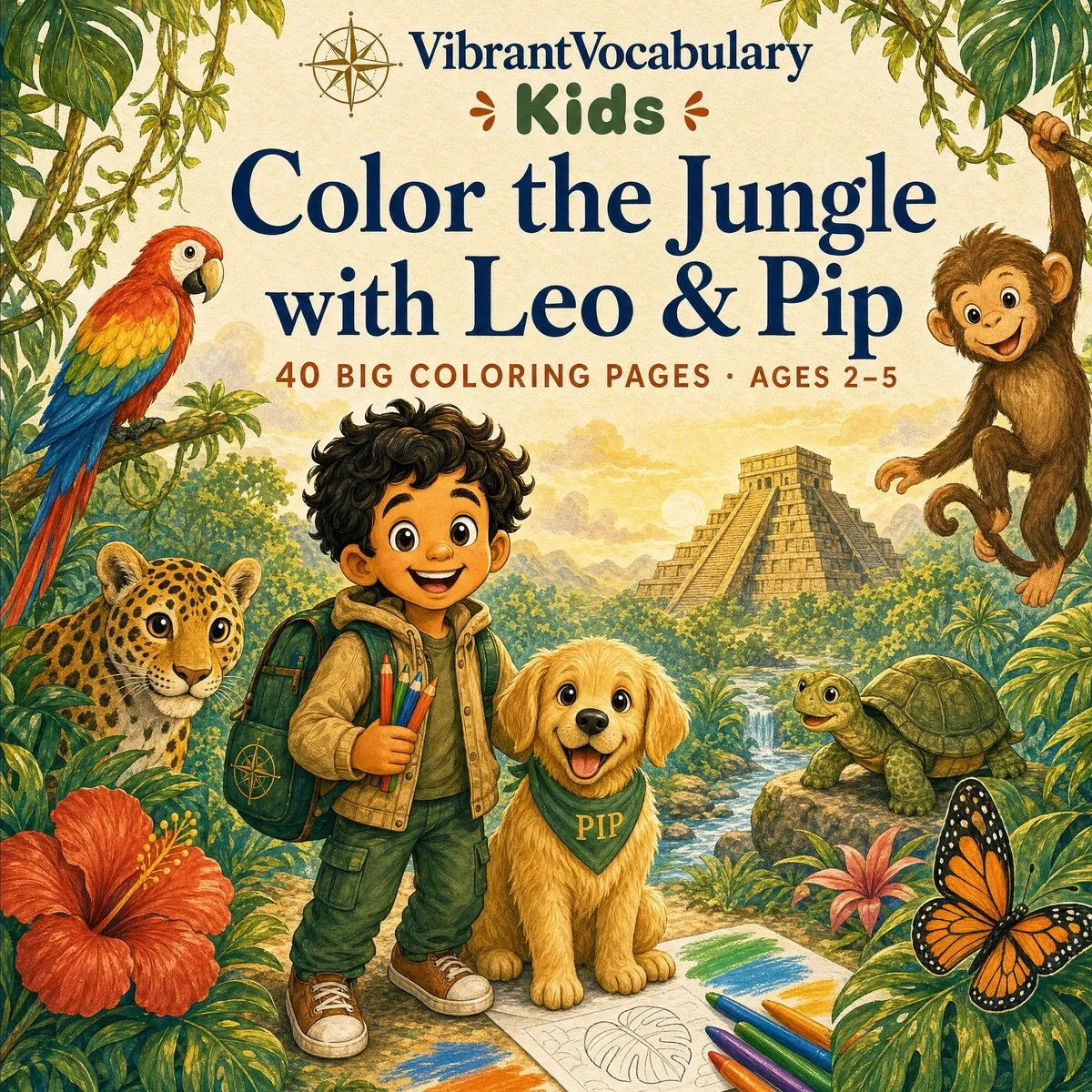
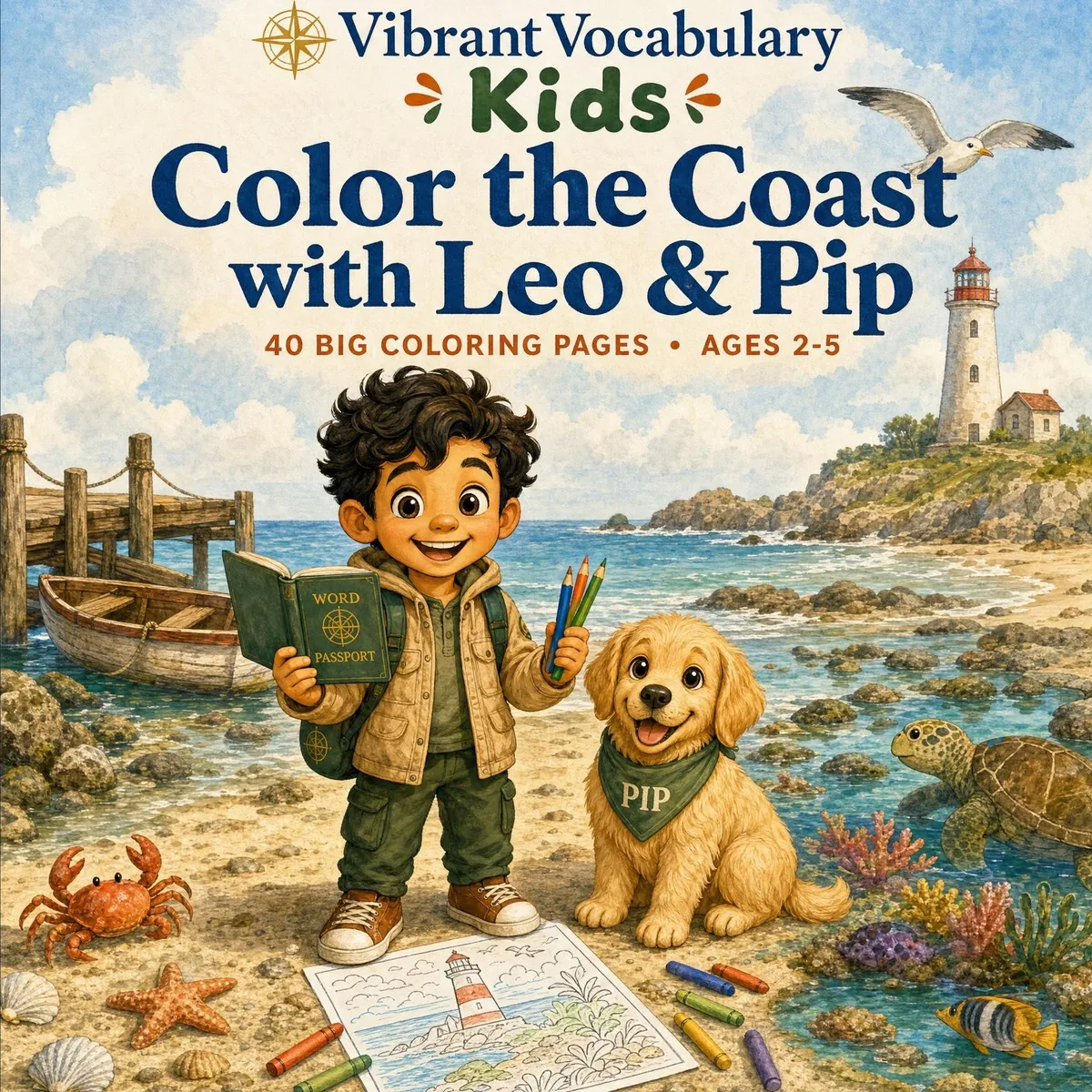
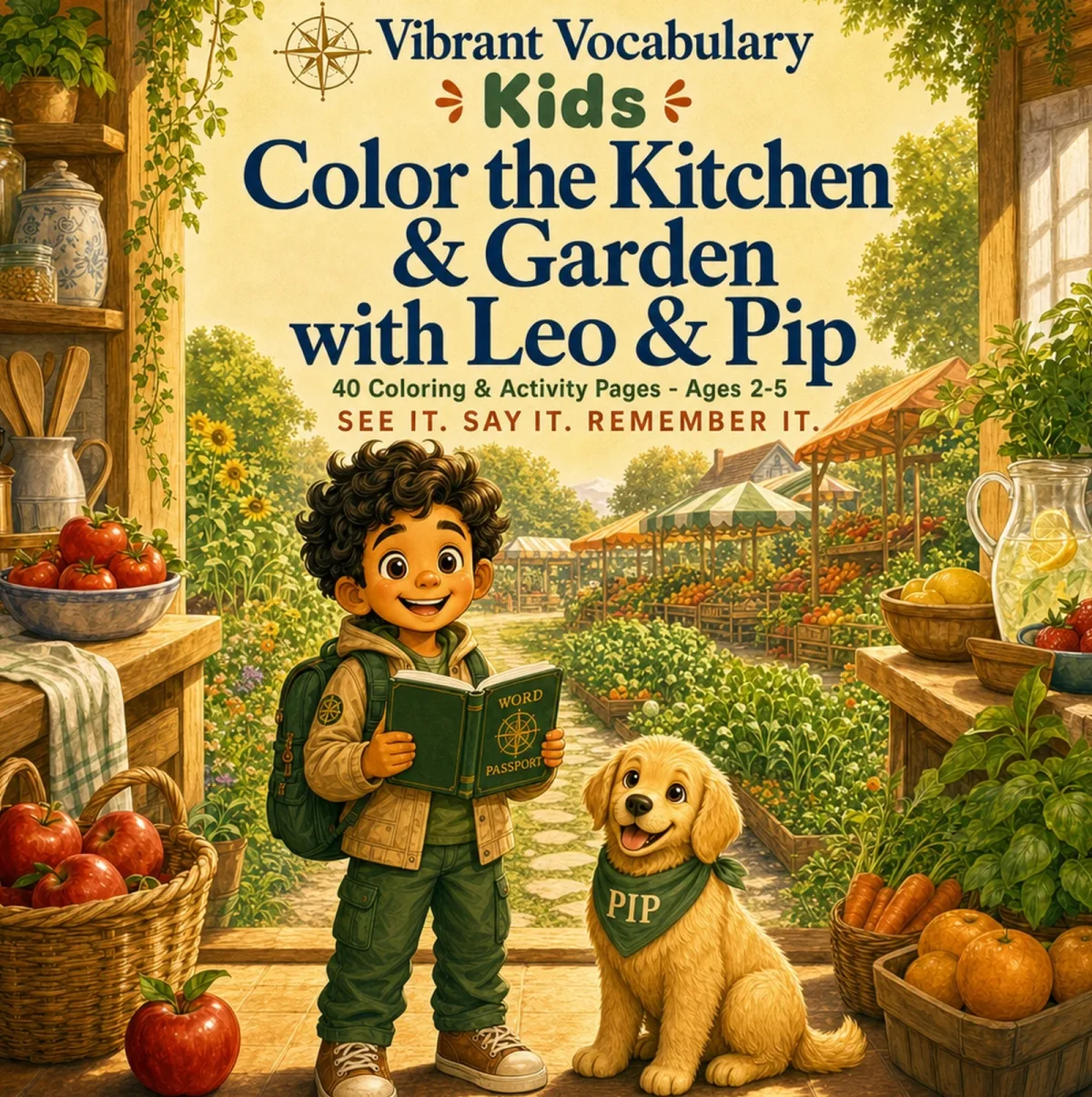
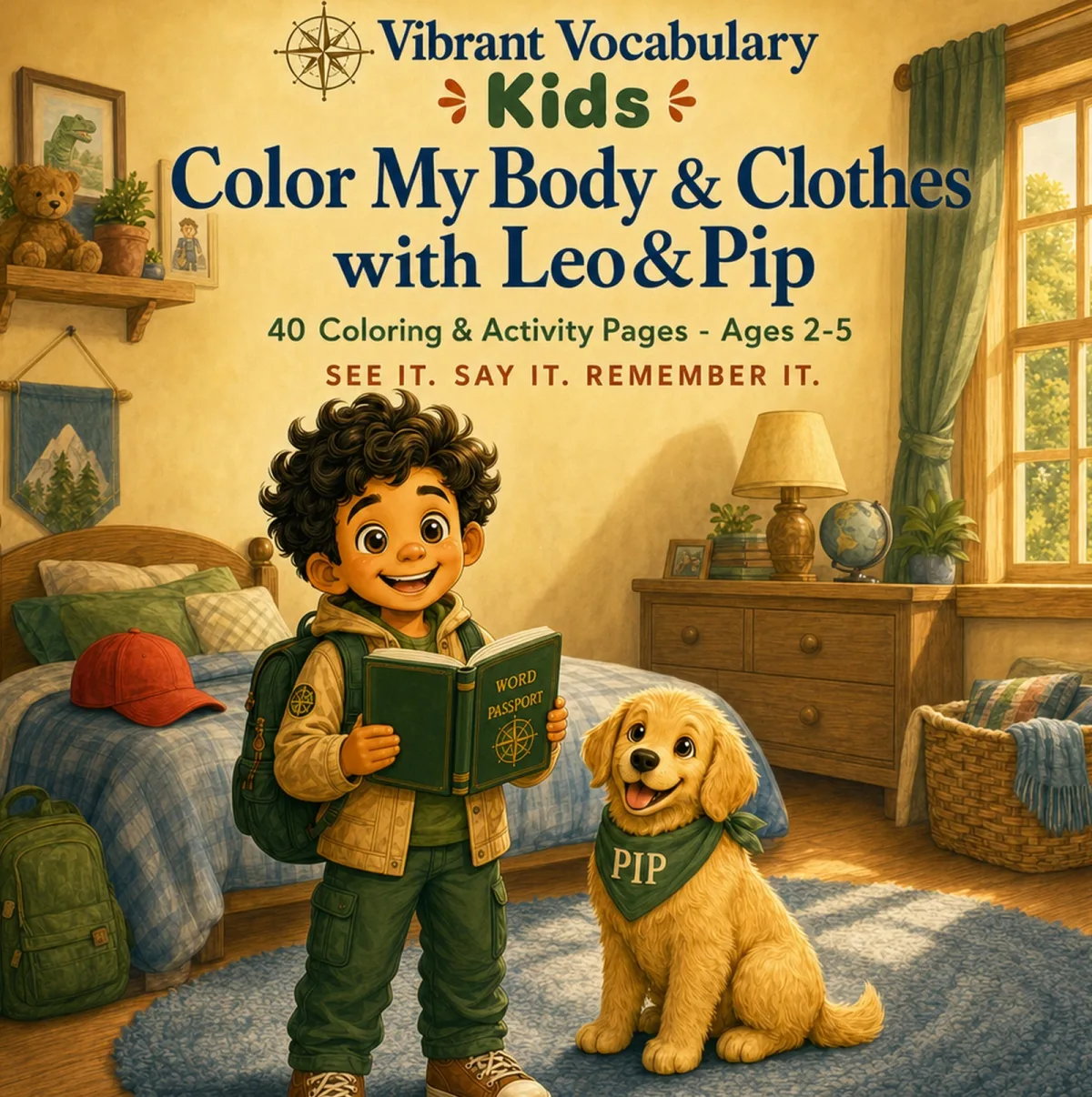
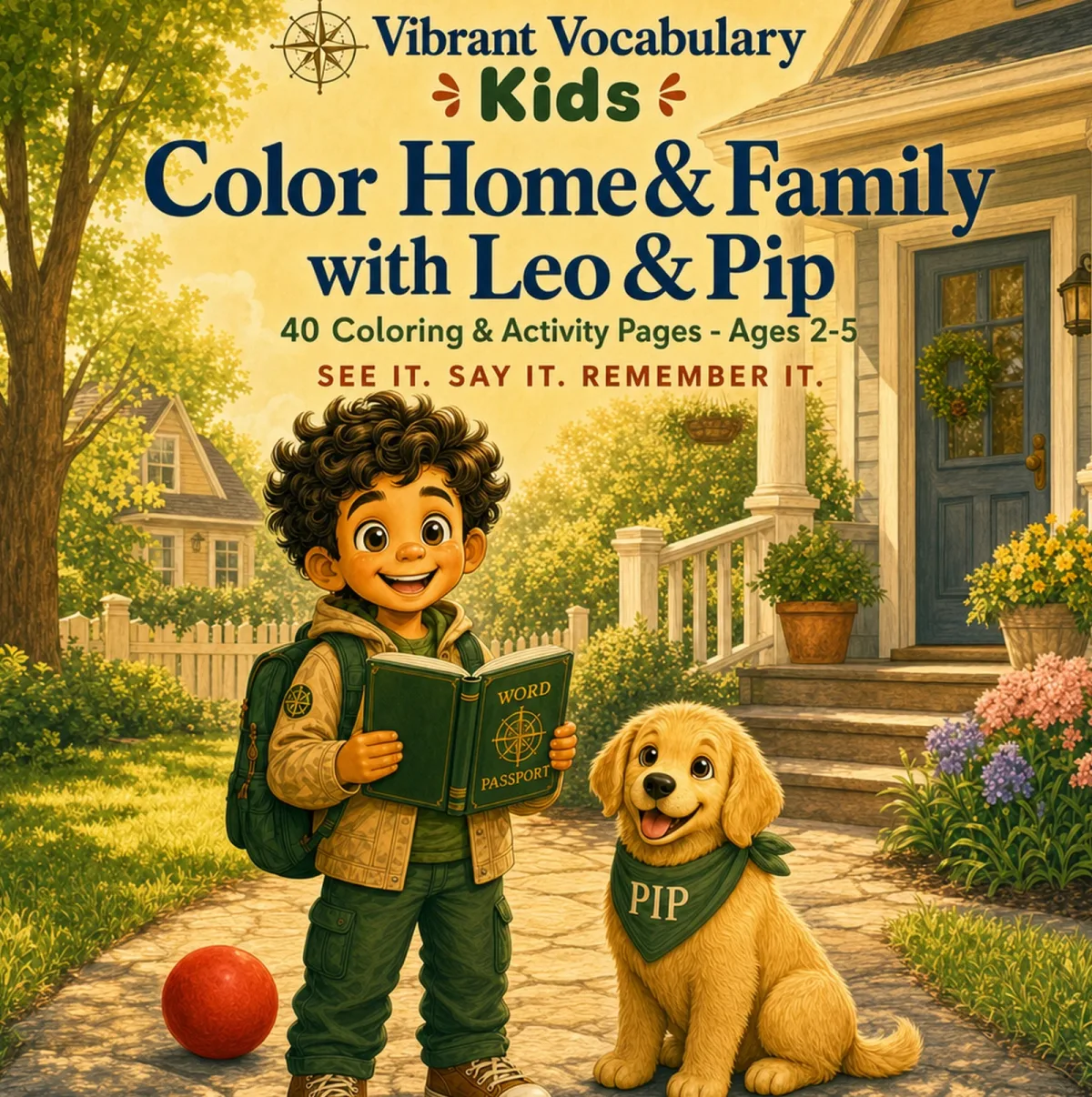
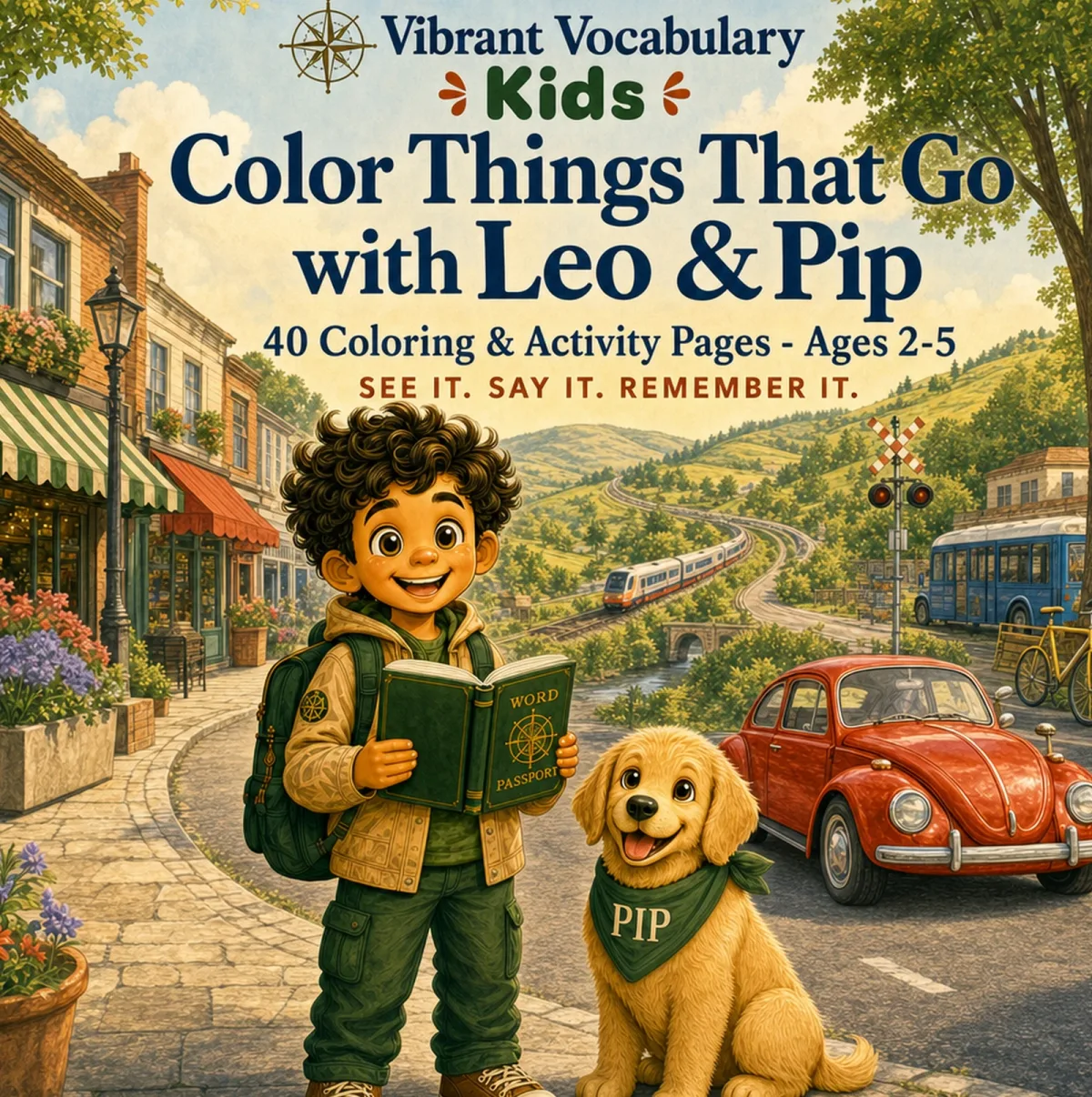
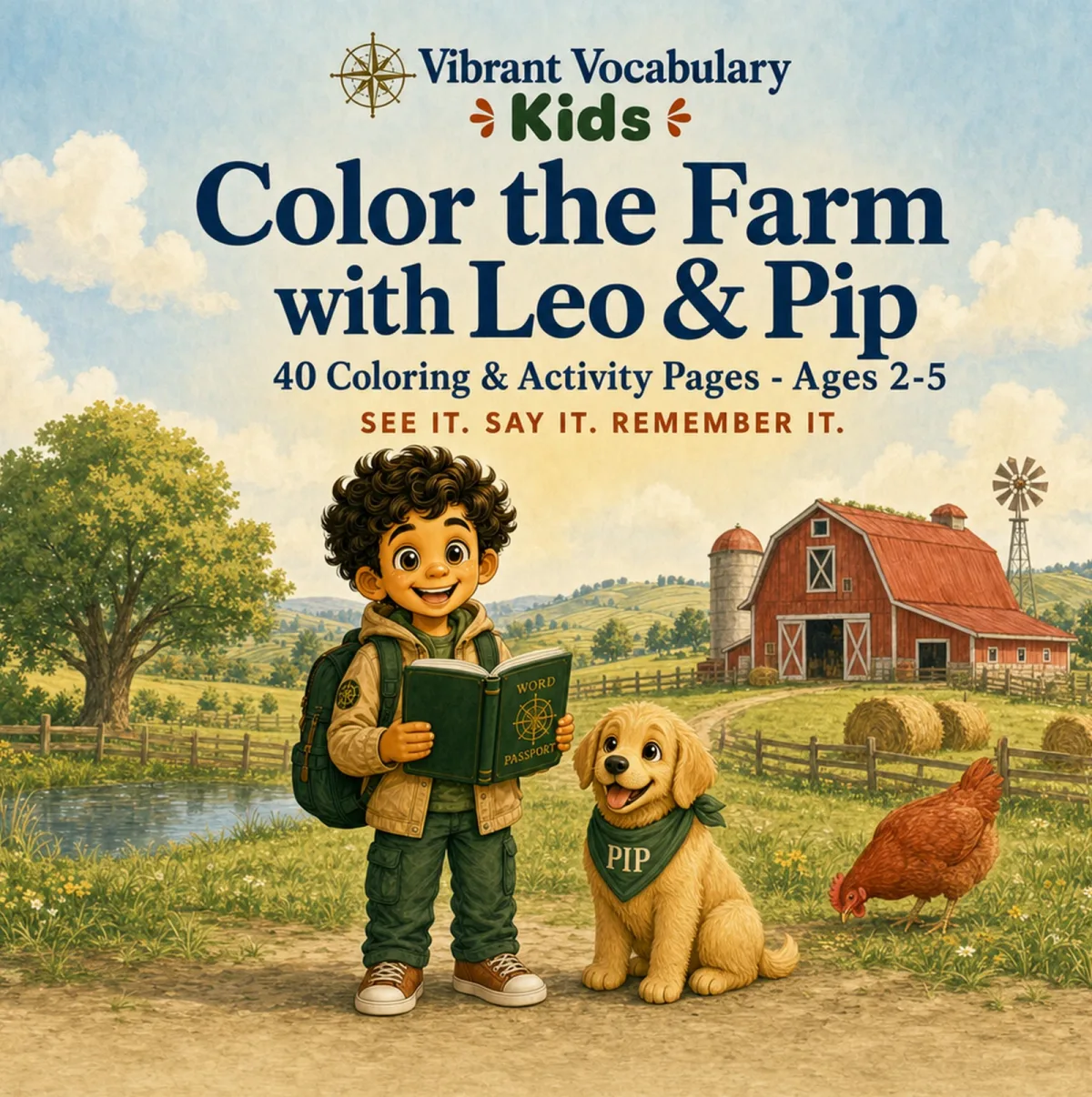
Completely screen-free and battery-free. Square 8.5 inch paperbacks, 40 pages, matte covers, thick simple lines. Easy for small hands to hold flat. The coloring and activity books pair page-for-page with the picture books.
›How is this different from flashcards?
Flashcards drill a word out of context. Here every word lives inside a scene your child can point at, search, and talk about — and a word attached to a story and a picture is a word they keep. The coloring books work the same way against printable packs: forty pages already bound on real paper, nothing to print or staple.
›How many words should a 2 year old say?
Most two-year-olds say somewhere between 50 and 200 words and are starting to put two words together, but the normal range is wide. Instead of counting, name what your child points at and give them the turn to say it back. If your child has no words by around 18 months or no two-word combinations by around 2, check in with your pediatrician.
›What counts as a first word?
Any sound your child uses on purpose to mean one thing counts: 'ba' for ball, 'woof' for dog, or a sign for 'more'. First words are approximations. Our books put one word per page so the approximation has a picture to attach to.
›Are these books good for a late talker or a child in speech therapy?
They are designed to support the kind of home practice speech-language pathologists suggest: one clear word per page, a picture to point at, a say-it-together pronunciation guide, and seek-and-find pages that get the word said again and again. They are books, not a treatment, and they do not replace an evaluation.
›Do the books come in Spanish or bilingual editions?
Every Word Explorer book is published in English and in Spanish, matched page for page, so a bilingual home can read the same story in both languages. The coloring books and the printable packs follow the same pairing.
›What makes a good coloring book for a 2 year old?
Thick bold outlines, one big subject per page, and lots of open white space a chubby crayon can fill. Ours are 40 pages, 8.5 inches square, and pair page for page with the picture book, so the word your child colors is one they already found.